Revise and resubmit · Review of Environmental Economics and Policy
Abstract
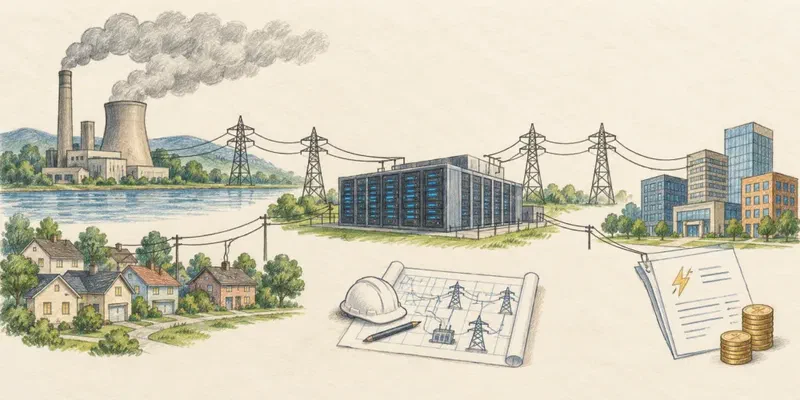
As cloud computing and artificial intelligence expand rapidly, data centers are becoming a large and rapidly growing source of new U.S. electricity demand. This article reviews emerging research on the environmental and electricity-cost consequences of data center growth. Environmental consequences, particularly emissions from electricity generation, depend on how much, where, and when electricity is consumed. We then examine ratepayer incidence: how the costs of serving large, concentrated new loads—through generation, transmission, and distribution investments—are allocated across ratepayer classes. We conclude by reviewing policy responses in tariff design, cost allocation, and utility planning, and identifying key gaps in the literature.
Working paper
Abstract
We study how firms and labor contracts shape workers’ adaptation to climate risk. Using real-time GPS and AI driver-monitoring data on truck drivers, we show that extreme heat impairs driving performance and that drivers adapt to it. We exploit a unique setting in which drivers work either as independent owner-operators, who pay their own operating costs, or as company employees, whose costs the firm bears. Owner-operators suffer adverse effects about twice as large as those for employees. Employees use more cabin cooling yet rest less and withdraw less labor on hot days. Firms appear to steer how much their employees adapt and on which margins. We build and quantify a model that accounts for the wedge between the firm’s and the worker’s valuation of adaptation, and for the firm’s optimal steering decision. We decompose the observed behavioral difference into cost-sharing and steering channels, and simulate how behavior changes when the externality is accounted for in drivers’ decisions.

Journal of the Association of Environmental and Resource Economists · Forthcoming
Abstract
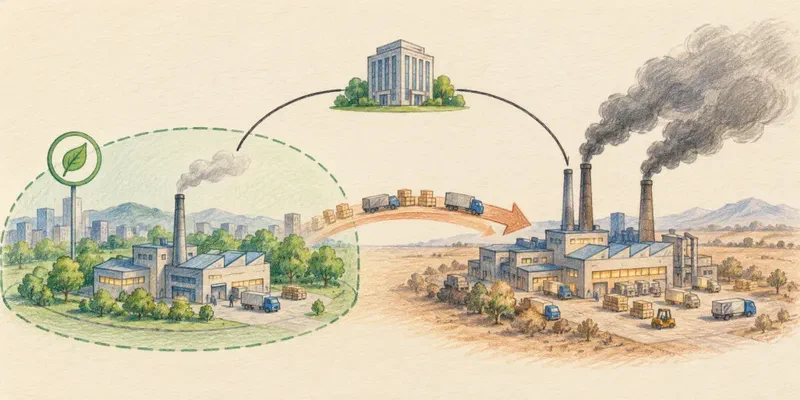
This paper provides causal evidence on a within-conglomerate channel of carbon leakage under China’s regional pilots of the Emission Trading System (ETS). Our analysis leverages firm-level tax records linked to detailed ownership networks and exploits the quasi-experimental nature of the ETS rollout. We find that regulated firms reallocate production and emissions to unregulated sister entities within the same ownership network, leading to a 10.2% increase in carbon emissions among unregulated subsidiaries. This estimate provides a lower bound on total leakage from the ETS pilots, implying that at least 19% of the emissions reductions achieved by regulated firms are offset through within-conglomerate leakage. We further show that leakage is concentrated in pilots regulating total emissions, while we find little evidence of leakage under pilots regulating emission intensity. Leakage effects are also stronger among low-emission firms and in regions with lower regulatory risk. Our results highlight that incomplete regulation can dilute policy effectiveness through leakage within ownership networks, suggesting the importance of accounting for corporate ownership structures when designing and evaluating carbon pricing policies.
Management Science
Abstract
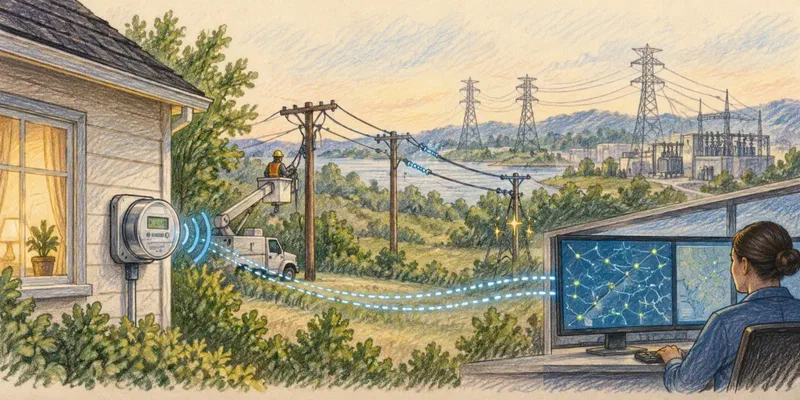
Electricity grids form the backbone of modern economies, but the utilities responsible for maintaining them face new energy management challenges associated with both aging infrastructure and climate change. Growing evidence suggests that digital technologies and data-driven decision-making may improve firm performance. However, existing work focuses on the private sector. Organizations providing public services have different incentives and constraints. In this paper, we narrow this gap through a study of the U.S. power sector. We construct a rich utility-level data set and estimate the effects of “smart” meters on electricity losses, a key indicator of system and utility performance. Implementing an augmented staggered difference-in-differences design, we find that electricity losses decrease by 4-7% following smart meter deployment, on average. Utilities’ annual revenue increases by 1-2%. We show that the underlying mechanisms relate to changes in energy management. Consumption measurement and billing accuracy improve, as indicated by an increase in sales, giving utilities a clearer understanding of the system to enhance decision-making. Utilities invest in complementary organizational capital that is important for fully realizing the benefits of digitalization, such as hiring “quants.” They also offer new products, like demand response programs, which attenuates the increase in sales but does not drive the reduction in losses. Power outage duration declines, suggesting that utilities use smart meters to improve reliability by restoring service faster after disruptions. Outage frequency remains unchanged.
Working paper
Abstract
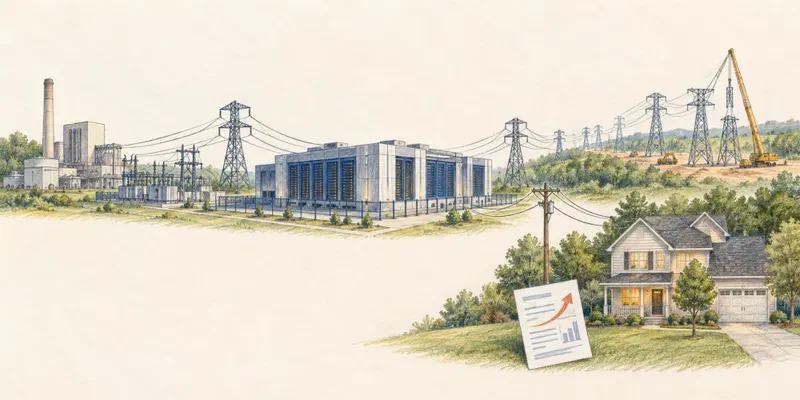
Who bears the costs when technological change requires new infrastructure? By linking U.S. data center entry from 2010 to 2024 to electric utilities’ prices, investments, and regulatory outcomes, we find that data center entry raises average retail rates by 2.7% and residential retail rates by 2.1%. Effects are concentrated among investor-owned utilities (5.6% on average) and are larger in restructured electricity markets. Infrastructure investment and utilities’ authorized rate bases increase, but price effects are lower where utilization improves. These findings suggest that the incidence of infrastructure-intensive technological change depends on system conditions and the institutions governing investment and cost recovery.
Revision requested · Journal of Environmental Economics and Management
Abstract
Instrumental variables are often used to address measurement error in air pollution exposure. This paper shows why that logic can fail when thermal inversion instruments are paired with satellite-based PM2.5. IV recovers the effect of true pollution only if proxy error is uncorrelated with the instrument. Using monitor, satellite, reanalysis, and meteorological data, we show that satellite PM2.5 error is strongly predicted by thermal inversions. In a crime application, satellite-based proxies materially change IV estimates despite strong first stages. The key diagnostic is whether proxy error is orthogonal to the identifying variation.

Journal of Environmental Economics and Management
Abstract
This paper examines the enduring effects of early-life exposure to heatwaves on the climate governance of local political leaders. We compile detailed biographical information on city mayors and party secretaries in China and combine it with comprehensive data on carbon emissions, economic outcomes, and policies for over 2800 counties from 2000 to 2017. We find that counties governed by officials who experienced heatwaves in their early life exhibit about a 1% reduction in carbon emissions relative to those governed by officials without such exposure. The effect is driven primarily by mayors, officials with more intense or repeated heatwave exposure, and cities with less industrialized economic structures. Further analysis provides suggestive evidence that these officials are more likely to implement carbon pricing and emission abatement policies, as well as policies with clear targets, enforcement, and mandatory language. Their governance reshapes local economic structures by constraining the activity and entry of emission-intensive manufacturing firms, a pattern further supported by firm-level evidence of lower carbon emissions.

Journal of Environmental Economics and Management
Abstract
This paper studies the effects of extreme temperatures on labor supply and performance in the heavy-duty trucking industry, a pivotal sector with broad productivity spillovers and significant road safety externalities. Using rich and high-frequency data on individual truck drivers in China, we find that exposure to extreme heat significantly reduces labor supply and increases the incidence of risky driving. Evidence further suggests that extreme temperatures disrupt off-duty rest and increase on-duty fatigue among drivers. We also document behavioral adaptation: drivers respond to heat by adjusting work schedules and reallocating labor to adjacent days. Furthermore, the estimated temperature effects on labor supply and risky driving are smaller among drivers employed by firms that offer heat subsidies.

Marine Resource Economics
Abstract
Climate-driven shifts in fish stocks, featuring many species across management boundaries, challenge fisheries sustainability. We examine the risk of regional stock extinction due to loss-driven overharvest in the face of climate change. We find critical thresholds for stock levels that, if crossed, can lead to depletion of fish resources within exclusive economic zones. We explore the sensitivity of the threshold to both biological and economic factors, emphasizing the overfishing incentives induced by climate-driven stock shifts. We further investigate the role of direct financial transfer (side payments) as a potential strategy to support conservation efforts under climate change. Loss-induced overfishing poses a substantial threat to global fisheries, especially in the tropical regions. Our findings underline the urgent need for adaptive management strategies to mitigate these risks.

Working paper
Abstract
We study climate adaptation in a distorted electricity market in one of the world’s most heat-exposed cities, Karachi, Pakistan. Poor households respond to extreme heat by increasing unbilled consumption or theft, exploiting limited enforceability and nonlinear tariffs. This adaptation amplifies pre-existing distortions: as temperatures rise, cost recovery deteriorates, further straining a sector characterized by load shedding and unreliable supply. Theft-resistant cables, a corrective measure installed by the electricity utility, mitigate heat-driven unbilled consumption, improving reliability and increasing electricity use among non-residential consumers. Billed consumption does not increase proportionally, implying reduced cooling and higher health expenditures among poor households.